Pay in installments of $5.85 with
 ,
,
 and
and

Shipping Estimate
USA
- USA
- CAN
- USA
- CAN
Ships within 48 hours · Estimated delivery Aug 25 - Aug 30
 Promo Codes Available:
For Your Every Summer RSVP, with Code: SUMMER15
Description
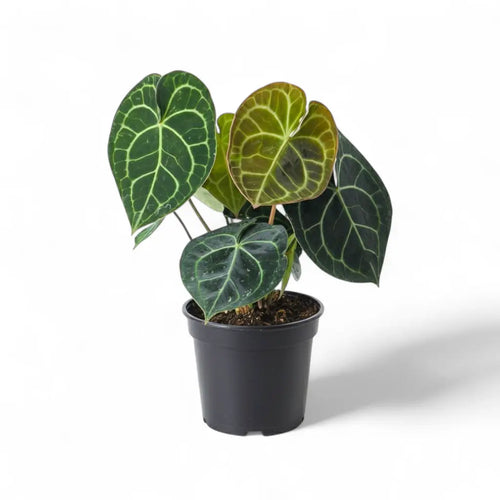
anthurium nickname Anthurium Clarinervium (Velvet Cardboard)The nickname says it all Velvet Cardboard Anthurium. Anthurium clarinervium is native to a single Mexican state, Chiapas, where it grows as an epiphyte on limestone karst and rocky outcroppings in the shaded forest. Its thick, almost leathery, heart shaped leaves have a dense velvety surface and a network of bold, bright white veins that stand out against the deep green with the clarity of chalk on a blackboard. The leaves feel as substantial as they
The nickname says it all — Velvet Cardboard Anthurium. Anthurium clarinervium is native to a single Mexican state, Chiapas, where it grows as an epiphyte on limestone karst and rocky outcroppings in the shaded forest. Its thick, almost leathery, heart-shaped leaves have a dense velvety surface and a network of bold, bright white veins that stand out against the deep green with the clarity of chalk on a blackboard. The leaves feel as substantial as they look — stiff, cardboard-like, built for endurance. At 40–65 cm it is compact enough for a shelf or tabletop and dramatic enough to anchor any room. One of the finest collector aroids for indoor growing.
Light
▾
Bright indirect light — away from direct sun at all times. An east-facing window or 1–2 m back from a south-facing window with a sheer curtain is ideal. In autumn and winter, a little gentle direct morning sun is beneficial. The white veining dulls noticeably in low light — a reliable indicator that the plant needs more brightness. A grow light works very well.
Watering
▾
Allow the top third of the soil to dry before watering — then water thoroughly until it drains freely. Empty the saucer immediately. The chunky mix dries faster than standard potting soil; check by weight — a light pot means it's time to water. Reduce frequency in autumn and winter. Consistent overwatering is the leading cause of decline.
Humidity
▾
50–70% preferred — higher than average indoor humidity. Use a humidifier, pebble tray, or morning misting. Critically, ensure good air circulation alongside humidity — stagnant moist air encourages fungal issues on the velvety leaf surface. Do not mist in the evening. Keep away from radiators, AC vents, and heating sources.
Growing Media
▾
Chunky, bark-heavy, extremely well-draining mix — this is non-negotiable. Use: 40% orchid bark, 25% perlite, 20% coco coir, 15% potting soil. pH 5.5–6.5. Can also grow in 100% sphagnum moss kept consistently moist but never sodden. Never use dense potting soil alone. Repot every 2–3 years in spring, one size up. A shallow, wide pot suits the root system better than a deep one.
Feeding
▾
Balanced liquid fertilizer at half strength every 4–6 weeks in spring and summer only. Apply to moist soil. Flush soil every 3 months to prevent salt build-up. Do not feed in autumn or winter. Less is more — over-fertilizing causes root burn and brown tips.
Yellow Leaves
▾
Overwatering or direct sun. Let the top third dry completely, check drainage, and move out of any direct light. Widespread yellowing with soggy soil means root rot — unpot, trim black roots, repot in fresh chunky mix, and water much less frequently.
Brown Tips or Crispy Edges
▾
Low humidity or proximity to a heater, AC vent, or fan. Boost humidity and relocate away from drying air sources. Also check watering — prolonged dryness causes the same symptom. Existing brown tips are permanent; trim neatly.
Dull Veining or Small New Leaves
▾
Insufficient light — the white vein pattern dims visibly in low light and new leaves grow smaller. Move to a brighter indirect position or add a grow light. Feed monthly during the growing season to support healthy leaf development.
New Leaves Look Rusty or Bronze
▾
Completely normal — new leaves emerge in a rusty green-bronze colour before deepening to the rich dark green of mature leaves over 5–10 days. Do not mistake this for a deficiency or disease.
Spider Mites, Thrips or Mealybugs
▾
Inspect leaf undersides and petiole bases regularly. Wipe with a soft damp cloth then spray with diluted neem oil or insecticidal soap every 5–7 days for 3 weeks. Good air circulation and maintaining 50%+ humidity reduce pest pressure significantly.
📋 Quick Plant Profile
| Botanical Name | Anthurium clarinervium Matuda |
| Common Names | Velvet Cardboard Anthurium, White-Veined Anthurium |
| Family | Araceae |
| Origin | Chiapas, Mexico only — limestone karst and rocky epiphytic habitat |
| Signature Feature | Thick, velvety, cardboard-like heart leaves with bold white veins |
| New Leaf Colour | Rusty bronze-green → deepens to dark green over 5–10 days |
| Light | Bright indirect; no direct sun; grow light effective |
| Watering | Top third dry; empty saucer immediately; reduce in winter |
| Humidity | 50–70%; good air circulation essential alongside humidity |
| Temperature | 20°C–27°C growing; 15–18°C winter rest; no cold drafts |
| Soil | Chunky bark-heavy aroid mix; pH 5.5–6.5; or 100% sphagnum moss |
| Pot Type | Shallow and wide; always with drainage holes |
| Mature Height | 40–65 cm; spread up to 1 m |
| Berries | Bright orange; produced on mature plants after flowering |
| Propagation | Root division in spring; stem cuttings rooted in water |
| Ideal For | Collectors, Shelves, Tabletops, Bright Humid Rooms |
| Care Level | Intermediate — chunky soil and air circulation are the keys |
Shipping Notes
- Free Standard Shipping on $100+ Orders to the USA.
- Except Preorder products are shipped in 48 hours.
- Delivery to the USA:
- Standard Shipping : 3-10 business days
- If time is of the essence, please consider selecting expedited delivery for faster service.
Exchange/Return Notes
- We offer a 30-day return/exchange service after receiving.
- Final sale items are not eligible for returns or exchanges.
- To process your return/exchange, please contact us at [email protected]
- Please click here for more details>>> Return & Exchange Policy